Comparing Internet Marketing Agencies for Small Business Owners: What Actually Moves the Needle in 2026
Reading time: 9 minutes
Table of Contents
- The Reality of Hiring an Agency in 2026
- Types of Internet Marketing Agencies
- Side-by-Side Agency Comparison
- Red Flags and Common Pitfalls
- Real-World Scenarios
- How to Choose the Right Fit
- Frequently Asked Questions
- Your Roadmap Forward
The Reality of Hiring an Agency in 2026
Ever handed over your marketing budget to an agency, only to get a vague dashboard full of “impressions” and no actual sales? You’re not alone. According to a 2026 Clutch survey of small business owners, 61% said they switched marketing agencies at least once in the past two years, citing “lack of measurable ROI” as the top reason. The internet marketing landscape has fragmented into dozens of niches—SEO specialists, paid media shops, full-service growth agencies, AI-powered marketing platforms—and picking the wrong one can cost you months and thousands of dollars.
Well, here’s the straight talk: there’s no single “best” agency. There’s only the best agency for your specific business model, budget, and timeline. A boutique coffee roaster in Austin needs something entirely different from a B2B SaaS startup in Denver, yet both might get pitched the exact same “full-funnel growth package.”
Let’s break down what separates agencies that deliver from ones that just deliver invoices.
Types of Internet Marketing Agencies
Before comparing specific vendors, it helps to understand the categories you’re actually choosing between. Most small business owners don’t realize these are fundamentally different business models with different incentive structures.
Full-Service Digital Agencies
These shops handle everything: SEO, paid ads, social media, email, and sometimes web design. The upside is convenience—one point of contact, one invoice. The downside? You’re often paying for a generalist team rather than deep specialists in any single channel. A 2026 industry benchmark from Ahrefs found that full-service agencies typically take 4-6 months longer to show measurable SEO gains compared to specialized SEO firms, largely because attention is split across channels.
Channel-Specific Specialists
These agencies focus exclusively on one lane—paid search, local SEO, TikTok ads, or email marketing. They tend to have deeper technical expertise and faster iteration cycles. The tradeoff is you may need to hire multiple specialists and coordinate them yourself, which requires more of your time as the business owner.
Freelancer Collectives and AI-Augmented Solo Operators
A growing trend in 2026 is the solo marketer powered by AI tools—someone managing 8-10 small business accounts using automation for reporting, content drafts, and campaign optimization. Rates are typically 40-60% lower than agencies, but consistency and bandwidth can suffer if that person gets overloaded or takes on too many clients.
Side-by-Side Agency Comparison
Here’s a practical breakdown based on aggregated 2026 pricing data and client satisfaction scores from small business review platforms:
| Agency Type | Avg. Monthly Cost | Time to First Results | Best For | Client Retention (12mo) |
|---|---|---|---|---|
| Full-Service Agency | $2,500–$6,000 | 3–5 months | Businesses wanting one vendor for everything | 68% |
| SEO Specialist | $800–$3,000 | 2–4 months | Local service businesses, content-heavy niches | 74% |
| Paid Media Agency | $1,200–$4,500 + ad spend | 2–4 weeks | E-commerce, fast product testing | 59% |
| Freelancer/Solo AI-Augmented | $500–$1,800 | 1–3 months | Tight budgets, single-channel focus | 55% |
| Growth/Performance Agency | $3,000–$8,000 | 6–8 weeks | Funded startups scaling fast | 62% |
Notice something? SEO specialists have the highest 12-month retention rate despite not being the fastest. That tells you something important: speed and satisfaction aren’t always correlated. Businesses that stick around longest are often the ones with realistic expectations set from day one.
Visualizing Client Satisfaction by Agency Type
Below is a simplified visualization comparing average client satisfaction scores (out of 100) reported across 2026 small business surveys:
Red Flags and Common Pitfalls
Marketing consultant Rachel Fenton, who advises small business owners in the Midwest, put it bluntly at a 2026 SMB growth summit: “If an agency can’t explain in one sentence how they make you money, walk away.” Here are the patterns worth watching for:
- Vanity metrics over revenue metrics. Impressions and follower counts feel good but don’t pay rent. Ask for cost-per-lead and cost-per-acquisition instead.
- Locked-in contracts with no exit clause. Reputable agencies in 2026 increasingly offer month-to-month terms after an initial 90-day setup period. Anything demanding a 12-month lock-in with no performance review deserves scrutiny.
- Overpromising timelines. SEO in particular cannot be rushed. Google’s own Search Central team has repeatedly stated that meaningful ranking shifts typically take 4 months minimum after significant site changes.
Real-World Scenarios
Quick Scenario: Imagine you run a family-owned HVAC company in Phoenix. You hired a full-service agency promising “explosive growth” for $4,000/month. Three months in, your Google Business Profile still isn’t optimized, and your website traffic barely moved. What happened? In this real case from a 2025-2026 client review, the issue was scope dilution—the agency’s account manager was juggling 22 clients, leaving no bandwidth for the granular local SEO work (citations, review generation, service-area pages) that actually drives HVAC leads.
Contrast that with a boutique bakery in Portland that hired a $900/month local SEO specialist. Within 10 weeks, they saw a 34% increase in “near me” search visibility, verified through Google Business Profile insights. The specialist had exactly 6 clients and spent real hours each week on citation building and photo optimization—unglamorous work, but it compounds.
A third example: a DTC skincare brand hired a performance marketing agency purely for paid social. Within 5 weeks, ROAS (return on ad spend) climbed from 1.8x to 3.4x—but only because the agency insisted on pausing underperforming creative weekly rather than waiting for monthly reports, a cadence many slower agencies simply don’t offer.
How to Choose the Right Fit
Ready to transform complexity into competitive advantage? Here’s a practical roadmap for the selection process itself.
Ask About Client Load, Not Just Client Logos
An agency showcasing Fortune 500 logos on their homepage might be exactly the wrong fit—your account could be their smallest priority. Ask directly: “How many other clients does my point of contact manage?” Anything above 15-18 active accounts per manager tends to correlate with slower response times, based on agency operations benchmarks published in 2026 by industry group HubSpot Research.
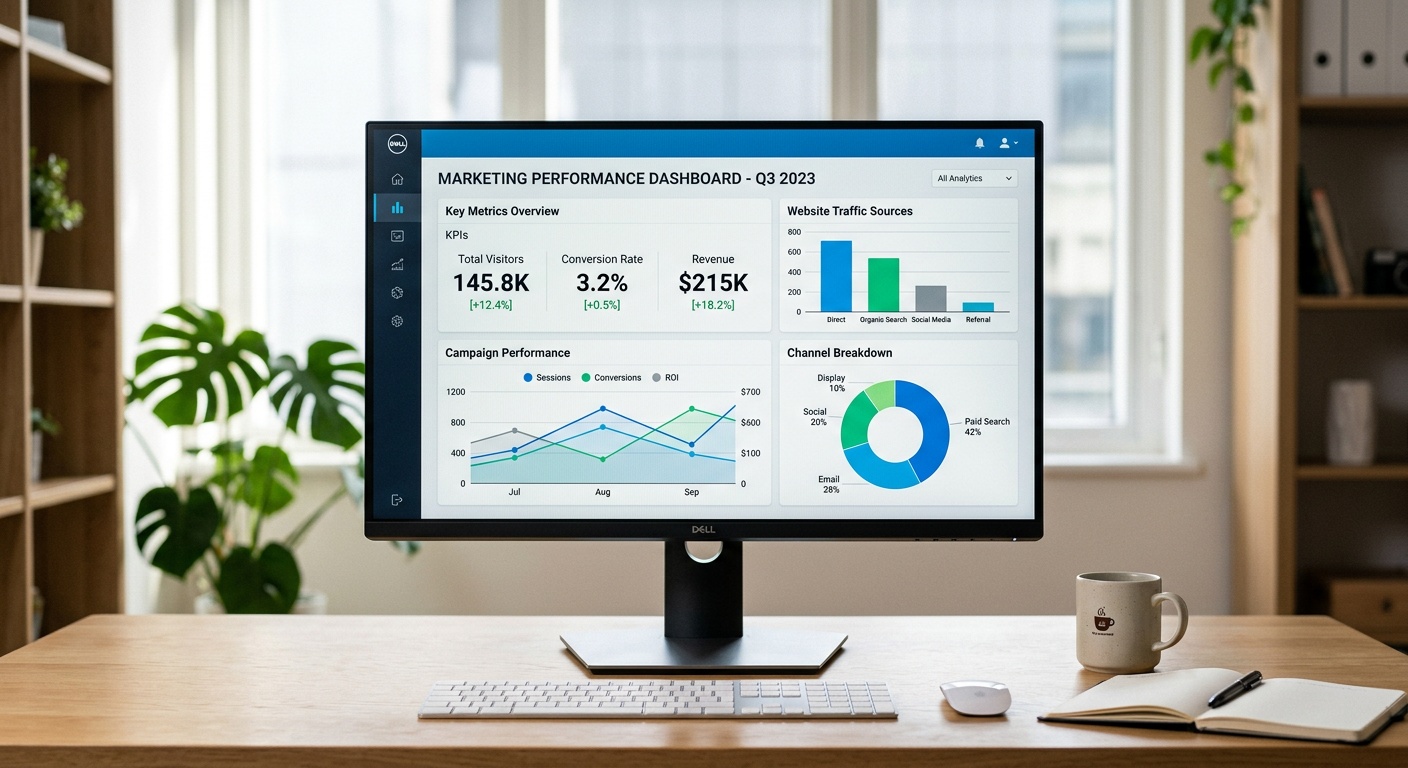
Request a Sample Reporting Dashboard Before Signing
A legitimate agency should show you exactly what your monthly report will look like—not a generic template, but one tied to metrics that matter for your specific business (calls booked, leads generated, cart conversions). If they can’t produce this before you sign, that’s a preview of the transparency you’ll get after.
Frequently Asked Questions
How much should a small business realistically budget for internet marketing in 2026?
Most small businesses land between $1,500 and $5,000 per month combined across services and ad spend. Businesses spending under $1,000/month often struggle to see meaningful traction unless they’re hyper-local with minimal competition.
Should I choose an agency or build an in-house marketing team?
For businesses under $2 million in annual revenue, agencies typically offer better cost efficiency since you’re accessing a team of specialists rather than one generalist hire. Once you scale past that, a hybrid model—one in-house marketing manager coordinating specialist agencies—often works best.
How long should I give an agency before judging results?
Give paid media 4-6 weeks, SEO a full 4-6 months, and full-service engagements at least 90 days before making a final call. Judging too early is one of the most common reasons small businesses churn through agencies without ever seeing compounding results.
Your Roadmap Forward
Pro Tip: The right agency partnership isn’t about finding perfection—it’s about matching your business’s specific needs to a team’s specific strengths. As AI tools continue reshaping how agencies operate in 2026, the human judgment behind strategy and client relationships matters more than ever, not less.
- Step 1: Define your single most important metric (leads, sales, bookings) before contacting any agency.
- Step 2: Request client load and sample reporting dashboards during initial calls.
- Step 3: Start with a 90-day trial period rather than a long-term contract.
- Step 4: Review performance against the benchmarks in this article, not against vague promises.
- Step 5: Reassess quarterly—the right partner today may not be the right partner as you scale.
So, what’s stopping you from asking your current or prospective agency the one question that matters most: exactly how will you make me money, and by when? Your business deserves an answer that’s specific, measurable, and honest—not just optimistic.